

NATURAL HISTORY STUDY


Primrose Syndrome Natural History Study - Now Enrolling
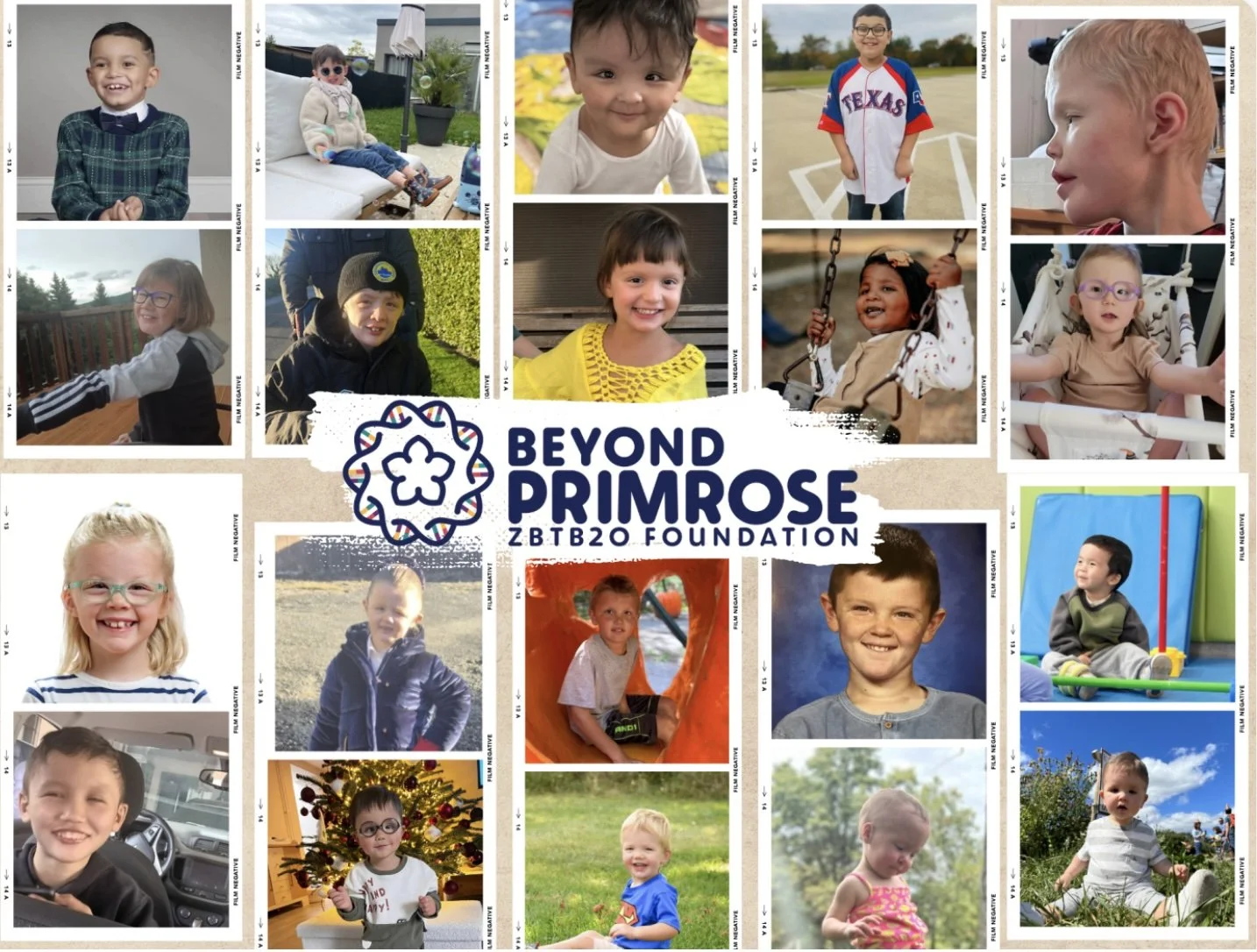
Every experience adds to what we know. Your family's participation can help shape the future of Primrose Syndrome research, care, and potential treatments.
About the Primrose Syndrome Natural History Study
Beyond Primrose ZBTB20 Foundation has partnered with COMBINEDBrain to launch a longitudinal Natural History Study for Primrose Syndrome.
A natural history study follows individuals over time to better understand how a condition affects people at different ages and stages of life. For Primrose Syndrome, the study will collect information about health, development, symptoms, care, and lived experiences to build a clearer picture of how the condition presents and may change across the lifespan.
By participating, individuals and families can help researchers:
Identify patterns in how Primrose Syndrome presents and changes over time
Better understand differences among individuals
Identify gaps in knowledge and care
Determine which symptoms and outcomes are most meaningful to individuals and families
Build the knowledge needed to guide future research and patient-centered studies
-
Click above Link JOIN THE NATURAL HISTORY STUDY
Create an account by clicking “not registered?” and complete the appropriate registration process for an adult participant or a caregiver registering on behalf of a child or dependent adult.
You must select “Beyond Primrose ZBTB20 Foundation/Primrose syndrome” from the patient advocacy group or disorder menu. If you do not select Beyond Primrose, your participation will not be connected with the Primrose syndrome study.
Upload a copy of the participant’s genetic test report. See our FAQ’s if you need help finding this report
Complete the surveys in your account.
If desired, connect electronic health records or upload relevant medical documents.
Why Natural History Data Matters

Every person with Primrose syndrome has a unique story—and every story adds valuable information. Natural history data can help our community:
Develop clinical care and monitoring recommendations for people with Primrose syndrome. This is especially important for families whose healthcare providers may be unfamiliar with the condition and how to manage it.
Identify common and less-recognized features of Primrose syndrome.
Understand when symptoms begin and how they may change with age.
Explore possible relationships between specific ZBTB20 variants and symptoms.
Identify areas in which families need better monitoring, care, resources, and support.
Select meaningful outcome measures for future research.
Document the size and diversity of the known Primrose syndrome community.
Demonstrate how Primrose syndrome affects individuals and families.
Show researchers and potential industry partners that our community is organized, engaged, and committed to advancing research.
Prepare the Primrose syndrome community for clinical trials and therapeutic development.
Natural history data are especially important when planning clinical trials. Researchers need to understand which symptoms should be studied, which age groups may benefit, how symptoms naturally change over time, and how to determine whether a treatment is making a meaningful difference.
COMBINEDBrain’s natural history program is designed to support these research-readiness goals.
Providing Medical Records
Medical records add important clinical information to the experiences reported through surveys. They can help researchers:
Verify when symptoms, treatments, and procedures occurred
Follow laboratory values, growth measurements, and other findings over time
Identify patterns that may be difficult to recognize from surveys alone
Reduce reliance on families remembering exact dates or medical details
Compare patient- and caregiver-reported experiences with information documented during clinical care
Providing medical records is optional. Families may connect available electronic health records or upload selected documents themselves.
Participants in the United States have the option to connect electronic health records from their treating healthcare institutions.
-
Log into your account
Select Manage EHR Connections from the sidebar.
Click Import Health Records.
Search for and select the name and location of your healthcare institution.
Follow the prompts to authorize the connection. You will need your login information from the facility you are connecting to.
Choose any or all categories of information you would like to import (allergies, condition, documents, encounters, labs and tests, medications, procedures, treatments and therapies, vaccines, vital signs).
If the participant receives care from more than one healthcare system, you may connect records from multiple institutions. The records available will depend on each healthcare institution and its electronic record systems
-
Log into your account
Select Documents from the sidebar.
Click Upload.
Choose the file you would like to add.
Follow the prompts to label and save the document.
You do not need to upload every page of the participant’s medical record. Focus on documents that are important findings, changes, or treatments.
International participants, families whose healthcare systems cannot be connected, and anyone who prefers not to use EHR integration may upload selected medical records manually.

Viewing Survey Results
After completing surveys, participants can view summaries showing how their responses compare with available results from other people in the Primrose syndrome or broader rare disease community.
These summaries may help families understand whether others report similar experiences. They are provided for informational purposes and should not be used to diagnose a condition or make medical decisions. Questions about an individual’s health should always be discussed with a qualified healthcare professional.

Every Family Makes the Data Stronger
A natural history study becomes more valuable as more people participate—and as families continue providing updates over time.
Your participation helps ensure that the diversity of ages, symptoms, abilities, experiences, and genetic variants across the Primrose syndrome community is represented. Whether an individual has mild, moderate, or significant medical and developmental needs, their experience matters.
Every story becomes data. Every data point becomes progress.
Frequently Asked Questions
Still have questions? Take a look at the FAQ or reach out anytime. If you’re feeling ready, go ahead and register.
-
Your genetic test report is part of your medical record. You may be able to find it in your patient portal or request a copy from the geneticist, genetic counselor, or other healthcare provider who ordered the testing.
If the report is not available through your patient portal, contact the medical-records department at the hospital or healthcare facility where the test was ordered. You have the right to request a copy for your records.
The report should include the name of the laboratory that performed the testing, the ZBTB20 variant identified, and the laboratory’s interpretation of that variant.
-
The study is completed online through Matrix, COMBINEDBrain’s natural history study platform. Individuals with Primrose syndrome—or their parent or legal caregiver—provide information through online questionnaires.
The study includes several surveys covering different aspects of health, development, and daily life. Some surveys may be assigned based on answers provided in an initial questionnaire. For example, if you report hearing loss, you may be offered a more detailed survey about hearing.
You may complete the surveys at your own pace and choose which optional surveys you wish to answer. If symptoms, medications, abilities, or healthcare needs change, you may update your information at any time.
Participants will also be asked to return periodically—generally once a year—to update their surveys. Collecting information from the same participants over time is what makes this a natural history study rather than a one-time registry. It allows researchers to understand how Primrose syndrome may change across different ages and stages of life.
-
We know rare disease families are asked to complete many surveys, and we recognize how valuable your time is.
In the Surveys section of your Matrix account, you will see the number of questions and estimated completion time for each survey. You do not need to complete everything in one sitting. You may work at your own pace, and your progress will be saved if you need to stop and return later.
Surveys are organized into Required and Optional categories. Because Primrose syndrome can affect many different body systems and varies widely from person to person, we strongly encourage families to complete every applicable survey. Even reporting that someone does not experience a particular symptom provides valuable information.
-
Matrix uses encryption, secure account access, role-based permissions, and audit trails to protect participant information. COMBINEDBrain describes Matrix as a fully auditable platform that complies with HIPAA, GDPR, and FDA 21 CFR Part 11 requirements.
The study’s informed-consent materials explain what information will be collected, how it may be used, and who may have access to it. Researchers may access study data only through an approved process and in accordance with the participant’s consent and the study’s data-governance requirements.
Before enrolling, families should review the informed-consent form carefully and contact the study team with any questions about privacy, data access, or withdrawing from the study.
-
No. There is no fee to participate in the Primrose Syndrome Natural History Study. The only cost is the time needed to register, upload the genetic report, and complete the surveys.
You do not need to complete everything in one session. Your progress will be saved so you can return when it is convenient for you.