

Care & Support

Clinical Care &
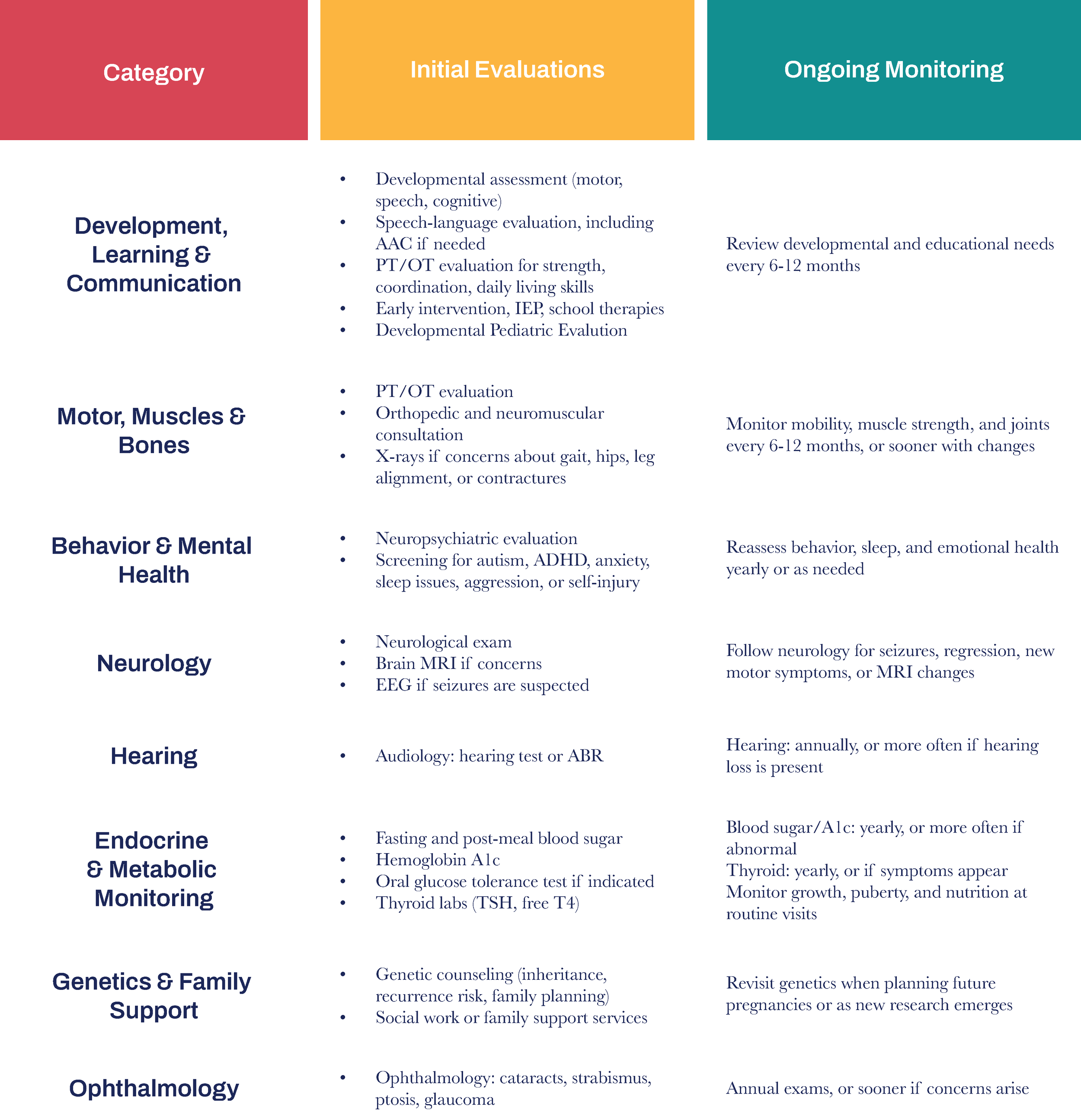
Recommended Evaluations
for Primrose Syndrome
Because Primrose Syndrome affects multiple body systems, children and adults benefit from a coordinated, multidisciplinary care plan. Below is a summary of recommended evaluations after diagnosis and what may be monitored over time.
Treatment
& Support
There is no cure for Primrose Syndrome at this time, something we are working to change. Currently, the focus is on supporting development, managing medical symptoms, and preventing complications.
Learn more about specific Support Focuses below.


-
PT, OT, and speech therapy
AAC devices as needed
Behavioral therapy (ABA or behavior intervention)
-
Anti-seizure medications
Medications for ADHD, anxiety, mood, sleep
Diabetes treatment
Thyroid & hormone treatments if indicated
-
Orthotics, braces, walkers, wheelchairs
Adaptive seating and communication devices
Mobility and sensory supports
-
IEP and school-based therapies